What Happened at Stonewall? A History of LGBTQ+ Movements
Stonewall was a turning point, not the beginning. This history follows early reformers, the Lavender Scare, Pride marches, AIDS activism and the different paths toward marriage equality.
By Adrian Solen · Published September 28, 2026 · Approximately 17 minutes
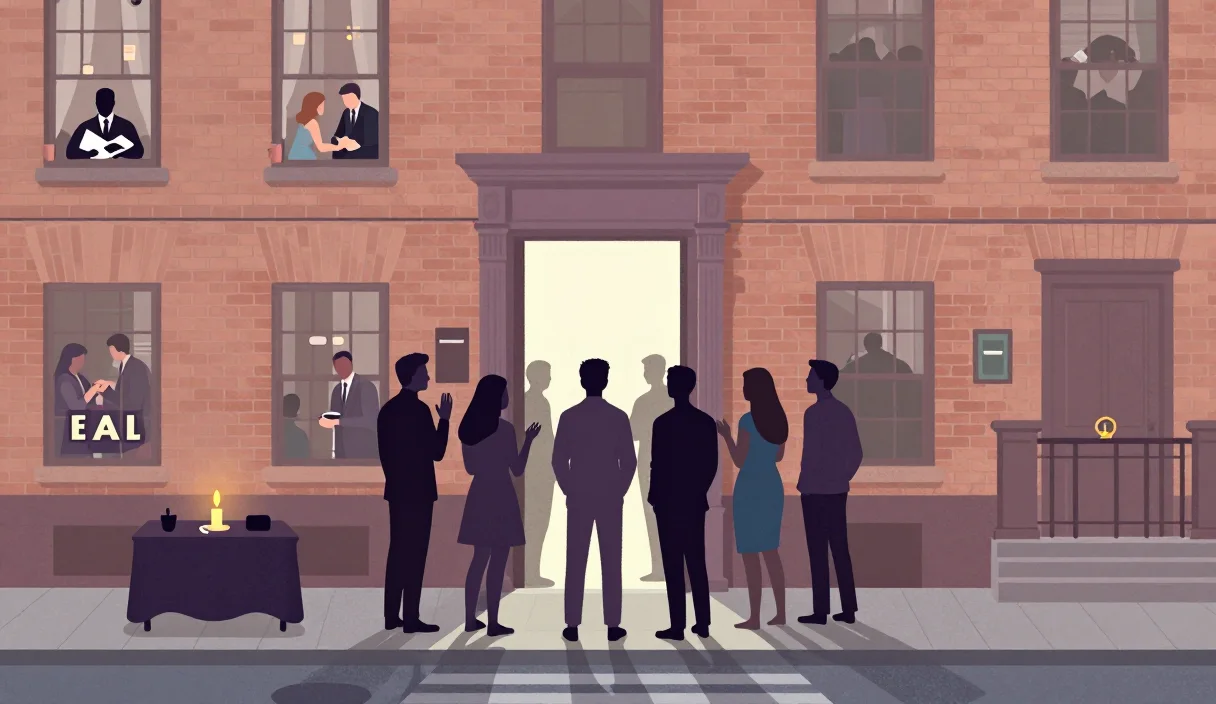
At Stonewall in the early hours of June 28, 1969, a New York City police raid met unexpected resistance from bar patrons and a growing crowd outside. Objects were thrown, police barricaded themselves inside, and demonstrations continued over several nights, turning a local confrontation into an enduring movement symbol.
Stonewall did not create LGBTQ+ organizing. Decades earlier, campaigners in Germany had petitioned against laws criminalizing sex between men. Postwar organizations in the United States had published magazines, challenged employment discrimination and protested police treatment. Resistance had already occurred at places such as Compton’s Cafeteria in San Francisco and the Black Cat in Los Angeles.
Nor did every country follow the same history. Some movements concentrated on decriminalization. Others fought employment purges, censorship, police harassment, medical classification, family law or access to health care. Courts drove change in some places; parliaments, public votes and community institutions mattered more in others.
The modern abbreviation LGBTQ+ is useful when discussing this broad history, but it is not a label that everyone in earlier periods would have recognized. Historical actors used terms such as homosexual, homophile, lesbian, gay, bisexual, transvestite and transsexual, sometimes by choice and sometimes because institutions imposed those words on them. A careful history preserves that difference.
A timeline of LGBTQ+ movements before and after Stonewall
The history of LGBTQ+ movements is not a straight line from silence to freedom, and it does not belong to a single country. Organizations grew within particular legal and cultural conditions. They sometimes learned from one another, but they did not always use the same language, pursue the same reforms or agree about what liberation required.
In Germany, Magnus Hirschfeld connected scientific research with a campaign against Paragraph 175, which criminalized sexual relations between men. In the postwar United States, organizations including the Mattachine Society and Daughters of Bilitis built networks under surveillance and social hostility. By the late 1960s, direct resistance to police treatment had occurred in several cities before Stonewall.
The later movement also developed through more than protest marches. Community newspapers, legal challenges, shelters, health organizations, archives, religious groups, research campaigns and mutual aid all became part of the story. The legal history explored in the history of laws criminalizing homosexuality helps explain why reform priorities differed so sharply from place to place.
This timeline is selective. It marks major developments discussed in this article rather than claiming to provide one universal sequence.
| Year | Place | What changed |
|---|---|---|
| 1897 | Berlin, German Empire | Magnus Hirschfeld co-founded the Scientific-Humanitarian Committee, which campaigned for reform of Paragraph 175. |
| 1919 | Berlin, Germany | Hirschfeld established the Institute for Sexual Science as a centre for research, clinical care, education and reform work. |
| 1950 | Los Angeles, United States | The Mattachine Society emerged as an influential organization in the postwar homophile movement. |
| 1955 | San Francisco, United States | The Daughters of Bilitis formed as a lesbian social and civil-rights organization. |
| 1966–1967 | San Francisco and Los Angeles | Resistance at Compton’s Cafeteria and protests following the Black Cat raid demonstrated that organized and spontaneous opposition predated Stonewall. |
| June 28, 1969 | New York City, United States | A police raid on the Stonewall Inn prompted resistance and several nights of demonstrations. |
| June 27–28, 1970 | Chicago, Los Angeles, New York and San Francisco | Marches and gatherings commemorated Stonewall’s first anniversary and helped establish annual Pride traditions. |
| 1980s–1990s | United States and beyond | AIDS service organizations and direct-action groups combined care, education, scientific advocacy and political pressure. |
| 2001–2019 | The Netherlands, South Africa, Argentina, the United States, Taiwan and other jurisdictions | Same-sex marriage was recognized through different combinations of legislation, court decisions and earlier regional reforms. |
Berlin reformers before Stonewall
Magnus Hirschfeld was a German Jewish physician and sex researcher who treated the study of sexuality and gender as both a scientific and a legal concern. In 1897, he co-founded the Scientific-Humanitarian Committee, which petitioned for reform of Paragraph 175. Hirschfeld argued that consensual same-sex relationships should not be punished and that sexuality did not determine a person’s moral character.
In 1919, during the early Weimar Republic, he established the Institute for Sexual Science in Berlin’s Tiergarten district. The Magnus Hirschfeld Institute for Sexual Science, as it is often described in English, combined several functions that would now usually be divided among universities, clinics, libraries and community organizations.
The institute offered medical care, professional training, research opportunities and public sex education. Its staff treated sexually transmitted infections and other sexual-health concerns, advised people about relationships and identity, and helped develop some of the earliest modern gender-affirming surgical procedures. The building also held Hirschfeld’s library, archive and collections, hosted lectures and films, and provided living space for some staff members and patients.
Hirschfeld distinguished gender expression from sexual attraction more clearly than many of his contemporaries. He coined the German term Transvestit in 1910 for a broad group of people who wore clothing associated with another sex or lived outside conventional gender expectations. The English word derived from it is now frequently considered outdated or offensive, but its historical meaning was wider than its later popular use.
His work should not be presented as modern science appearing fully formed. Some of Hirschfeld’s theories were disputed during his lifetime or later rejected, and parts of his thinking were shaped by eugenic assumptions then circulating in medicine. What made his institute unusual was its attempt to connect research, patient care, public education and legal protection for people whose sexuality or gender did not fit prevailing norms.
That work became an early target of the Nazi regime. On May 6, 1933, Nazi students accompanied by members of the SA ransacked the institute and removed books, artifacts and clinical records. Much of the material was destroyed in public book burnings days later. The institute was forced to close, while Hirschfeld remained in exile and died in Nice in 1935.
The destruction did more than end one institution. It scattered an archive, interrupted medical and reform networks, and helped erase public knowledge of a movement that had existed decades before Stonewall.
What was the Lavender Scare?
The Lavender Scare was a sustained United States government campaign that investigated, excluded and dismissed federal workers believed to be homosexual. It grew alongside McCarthy-era anti-communism, but it was a distinct employment purge: people were targeted because officials treated homosexuality itself as evidence of immorality, vulnerability to blackmail or a supposed security risk.
The campaign developed during the late 1940s and intensified in 1950 as members of Congress investigated the employment of suspected homosexuals in federal agencies. Anti-communist and anti-gay suspicions often reinforced one another. Yet a person did not have to be accused of Communist Party membership or espionage to lose a career. Allegations about private relationships, police records or perceived mannerisms could trigger questioning and removal.
President Dwight D. Eisenhower’s Executive Order 10450, signed on April 27, 1953, expanded the federal security program. Among the conduct considered relevant to employment suitability was what the order called “sexual perversion,” the stigmatizing administrative language then used for homosexuality.
Thousands of workers lost jobs or resigned under pressure, although the surviving records do not produce one certain total. Investigations also discouraged unknown numbers of people from applying for government employment. The policy’s reach extended beyond Washington because contractors and other employers adopted similar security practices.
The Lavender Scare was therefore related to the Red Scare without being identical to it. Anti-communism supplied the language of national security, but the purge maintained its own target and survived beyond Senator Joseph McCarthy’s influence. The United States Civil Service Commission ended its general exclusion of gay people in 1975, while the State Department changed its Foreign Service policy in 1977.
The purge also produced resistance. Activists such as Frank Kameny turned dismissal and exclusion into organized campaigns against federal employment discrimination, connecting a period of repression to the homophile movement that existed before Stonewall.
What happened at Stonewall in 1969?
In the early hours of June 28, 1969, police entered the Stonewall Inn at 51–53 Christopher Street in Greenwich Village. As officers inspected identification and made arrests, patrons and neighbors gathered outside. The crowd’s anger grew, objects were thrown, and outnumbered officers retreated into the bar. Demonstrations continued over several nights.
The Stonewall Inn was a popular gay bar operated without a conventional liquor licence and connected to organized crime. Such arrangements were common because openly gay establishments faced official hostility, while patrons had few places where they could meet publicly. Police raids, identity checks, humiliation and arrests formed part of that environment.
The raid began at approximately 1:15 a.m. Undercover officers had entered earlier, and additional police arrived after the sale of alcohol was observed. Customers were ordered to present identification. People whom police considered gender nonconforming faced the threat of invasive checks. Some patrons were released, while employees and others were detained.
Instead of disappearing into the surrounding streets, people remained outside. The crowd expanded as friends, neighbors and people from nearby Christopher Park joined it. Cheers and taunts gave way to thrown pennies, bottles, paving stones and other objects as police attempted to load arrested people into vehicles. Officers withdrew into the Stonewall Inn and barricaded themselves inside until reinforcements arrived.
The strongest evidence therefore supports a collective sequence: a raid, a gathering crowd, resistance to arrests, an escalating confrontation and further demonstrations on later nights. It also supports the presence of gay men, lesbians, drag performers, gender-nonconforming people, street youth and others whose exact identities cannot always be reconstructed from the surviving evidence.
Some familiar details remain uncertain. Eyewitnesses did not leave one agreed account of who threw a first brick, bottle, coin or glass, or whether any single object began the uprising. Later retellings have sometimes assigned that role to a celebrated individual, but the historical record does not establish one unquestioned initiator. The search for a lone person who “started Stonewall” can obscure the hundreds of decisions through which a crowd refused to cooperate with a familiar form of mistreatment.
Accounts also differ because participants arrived at different moments, stood in different places and remembered events years later. Newspapers, police reports and oral histories describe overlapping but not identical scenes. “Stonewall riots” remains a familiar name, while many historians and institutions use “Stonewall uprising” to emphasize sustained resistance rather than uncontrolled disorder.
Stonewall mattered because activists recognized its political potential. It gave existing anger a memorable place and date, encouraged new organizations, and became a symbol around which a larger movement could organize. That is different from saying the movement began there.
The first anniversary marches of 1970
Stonewall’s lasting connection to the history of Pride Month was created through organization after the uprising. Activists did not simply wait for an anniversary celebration to appear. They debated how to replace or transform earlier demonstrations and how to turn the memory of Christopher Street into a broader public action.
Members of the Eastern Regional Conference of Homophile Organizations proposed moving beyond the Annual Reminder, a carefully managed July 4 demonstration held at Independence Hall in Philadelphia. Their resolution called for an annual late-June demonstration in New York named Christopher Street Liberation Day, without the dress or age rules associated with earlier protests. Other cities were invited to organize parallel events.
Chicago held a Gay Liberation March on June 27, 1970. On June 28, the first anniversary of Stonewall, marchers gathered in New York, Los Angeles and San Francisco. New York’s Christopher Street Liberation Day march travelled from Greenwich Village toward Central Park. The different cities did not use one format: some events were marches, some were rallies or gatherings, and Los Angeles obtained a parade permit.
These events helped establish an annual rhythm. Organizers repeated them, more cities created local versions, and terms such as Gay Freedom Day, Gay Liberation Day and Gay Pride came into wider use. Pride gradually expanded beyond one march or weekend into a season of demonstrations, memorials, festivals, educational events and community gatherings.
Official recognition came later and did not create the tradition. President Bill Clinton issued a Gay and Lesbian Pride Month proclamation in June 1999. President Barack Obama used the name Lesbian, Gay, Bisexual, and Transgender Pride Month in 2009, and President Joe Biden used Lesbian, Gay, Bisexual, Transgender, Queer, and Intersex Pride Month in 2022.
Pride Month therefore has two connected histories. One is the history of resistance to policing at Stonewall. The other is the history of activists who deliberately preserved that event through annual public action.
Why lesbian, gay, bisexual and trans organizing did not follow one agenda
LGBTQ+ movements grew through alliances, but they were never a single organization with one programme. Lesbian, gay, bisexual and trans people experienced some shared forms of criminalization and stigma. They also confronted different questions involving gender, policing, employment, family life, medical care, feminism, race, poverty and public visibility.
The Daughters of Bilitis began in San Francisco in 1955 as a private social alternative to bars vulnerable to police raids. It soon developed into a lesbian civil-rights organization and published The Ladder from 1956. Lesbian organizers addressed hostility toward same-sex relationships, but they also faced sexism in male-led organizations and disputes within women’s movements over the place of lesbian issues.
Post-Stonewall gay liberation groups often rejected the cautious public image associated with parts of the homophile movement. Some demanded broad transformation of sexual and family norms. Others concentrated on achievable legal reforms, electoral politics or professional institutions. Disagreements over respectability, direct action and cooperation with government appeared repeatedly.
Bisexual activists were present within sexual-liberation and gay-rights work, but bisexuality could be treated as temporary, politically suspect or invisible. Bisexual-specific groups formed during the 1970s partly because some people felt excluded from both heterosexual society and lesbian or gay organizations. Their concerns included recognition, stereotypes and the assumption that a person’s current partner revealed their entire sexual orientation.
Trans and gender-nonconforming organizing also had histories that cannot be reduced to Stonewall. People now included in trans history resisted police at Compton’s Cafeteria in San Francisco in 1966. After Stonewall, Sylvia Rivera and Marsha P. Johnson helped form Street Transvestite Action Revolutionaries, known as STAR, which supported homeless and street-involved youth while pressing gay organizations to address poverty, housing and gender-based policing.
Historical terminology requires care here. Johnson described herself using words such as drag queen and transvestite rather than the later identity label transgender. Placing her within trans history can illuminate important connections, but it should not erase the language she used or suggest that identity terms have remained unchanged.
Race and class further shaped movement priorities. Black, Latino and other activists of colour formed organizations when predominantly white groups failed to address racism or represent their experiences. Poor people and street youth often needed housing, food and protection from police more urgently than access to professional institutions. People could participate in several movements at once, including civil-rights, feminist, labour, antiwar, disability and religious reform campaigns.
The history is therefore one of coalition and friction. Shared action was possible without identical lives or political priorities.
AIDS activism, community care and policy change
The history of AIDS is a history of bereavement and institutional failure, but it is also an essential chapter in community organization and policy reform. People living with HIV and AIDS, their partners and their allies created services when established systems were slow, unwilling or poorly prepared to respond.
During the early 1980s, community organizations established telephone hotlines, distributed emerging information about transmission and safer sex, arranged counselling and connected sick people with medical and legal assistance. Buddy programmes paired volunteers with people who needed transport, household help, companionship or advocacy. Other projects provided meals, housing support and hospice care.
This labour was not confined to one demographic. Gay men played a central role because the epidemic struck their communities with devastating force, but lesbians, bisexual people, trans people, health workers, religious volunteers, people with haemophilia, people who used injected drugs, women and affected families also organized. Race and poverty influenced who received information, respectful care and access to experimental treatment.
People with AIDS also resisted being represented only as passive victims. The Denver Principles, written in 1983, called for people with AIDS to be involved in decisions that affected their lives. That principle helped reshape later arguments about patient expertise, informed consent and participation in medical research.
The AIDS Coalition to Unleash Power, or ACT UP, formed in New York in 1987 and developed chapters elsewhere. Its members combined demonstrations with close study of clinical trials, drug regulation, insurance, public-health definitions and pharmaceutical pricing. Their actions could be confrontational, but they were frequently based on detailed scientific and administrative knowledge.
In October 1988, hundreds of ACT UP demonstrators surrounded the Food and Drug Administration’s headquarters in Maryland. Activists argued that people facing a fatal illness needed faster access to promising experimental treatments and a meaningful role in designing research. Their pressure contributed to a broader process in which the FDA developed treatment-access and accelerated-approval mechanisms and expanded patient participation in advisory work.
Activists also challenged definitions of AIDS that failed to recognize conditions commonly appearing in women. They demanded that clinical studies include populations neglected by early research and that treatment be available beyond major specialist centres. These campaigns did not eliminate inequality, and debates continued over how to balance rapid access with reliable evidence about safety and effectiveness.
Community care and direct action reinforced each other. Volunteers understood the practical consequences of delayed treatment, insurance exclusion, stigma and inadequate housing because they encountered them in hospital rooms and homes. Policy work was grounded in those experiences.
The movement’s influence reached beyond HIV. Patient representatives became more involved in regulatory discussions, community advisory boards gained a larger role in research, and public-health institutions faced stronger demands to explain how decisions were made. AIDS activism changed who could claim expertise in medicine.
Marriage equality followed different routes around the world
The history of same-sex marriage has no single worldwide starting point or legal route. Some jurisdictions changed marriage laws through parliament. Others acted after constitutional courts found exclusions unlawful. In federal systems, regional decisions preceded nationwide recognition. In a few countries, referendums became part of the process.
Marriage was not always the central goal of LGBTQ+ movements. Earlier organizers frequently concentrated on decriminalization, censorship, employment, police conduct or medical stigma. Even when partnership recognition became prominent, activists debated whether marriage equality would provide necessary legal security or place too much emphasis on one family form.
Marriage campaigns also met opposition rooted in religious, philosophical and institutional understandings of marriage. The legal question in each jurisdiction concerned civil marriage: who could obtain a state marriage licence and receive the duties, protections and recognition attached to it. Laws did not develop uniformly, and their provisions concerning adoption, religious solemnization and recognition of foreign marriages varied.
The Netherlands became the first country to permit same-sex couples to marry, with its law taking effect on April 1, 2001. Canada followed a federal path in which courts opened marriage in several provinces before Parliament passed the Civil Marriage Act in 2005.
South Africa followed another route. Its post-apartheid constitutional framework prohibited discrimination based on sexual orientation. After a Constitutional Court decision required the exclusion of same-sex couples to be corrected, Parliament passed the Civil Union Act in 2006, making South Africa the first country on the African continent to provide nationwide marriage recognition for same-sex couples.
Argentina became the first Latin American country to enact same-sex marriage nationwide in 2010. In the United States, recognition developed state by state through litigation, legislation and public votes before the Supreme Court decided Obergefell v. Hodges on June 26, 2015. The Court held that same-sex couples had a constitutional right to marry and to have their marriages recognized throughout the country.
Taiwan’s Constitutional Court ruled in 2017 that the existing exclusion of same-sex couples from marriage violated constitutional protections. Legislation took effect in 2019, making Taiwan the first jurisdiction in Asia to permit same-sex marriage.
These milestones did not result from a single international organization or one argument copied unchanged across borders. Campaigners worked within different constitutions, religious landscapes, party systems and family laws. Success in one country could influence public debate elsewhere, but it did not determine the next country’s path.
| Year | Jurisdiction | Legal route |
|---|---|---|
| 2001 | The Netherlands | Parliamentary legislation made it the first country to permit same-sex couples to marry. |
| 2005 | Canada | Provincial court decisions preceded nationwide legislation through the Civil Marriage Act. |
| 2006 | South Africa | Parliament enacted the Civil Union Act following a Constitutional Court decision. |
| 2010 | Argentina | National legislation made Argentina the first Latin American country to recognize same-sex marriage. |
| 2015 | United States | The Supreme Court’s Obergefell v. Hodges decision required marriage and recognition nationwide. |
| 2019 | Taiwan | Legislation followed a Constitutional Court ruling and created the first same-sex marriage system in Asia. |
Source note: why accounts of LGBTQ+ history differ
LGBTQ+ history is reconstructed from sources created for different purposes. An activist flyer tries to persuade and mobilize. A police report records what officers considered relevant. A newspaper may reflect the prejudices, vocabulary and limited access of its time. A government file documents policy but can conceal the human effects behind administrative language.
Oral histories preserve details that official records ignored, especially the experiences of people who were poor, gender nonconforming or excluded from established organizations. Memory is also shaped by time, trauma and later public narratives. Two Stonewall participants could both be sincere and still remember the order of events differently.
Activist archives show what organizations discussed among themselves, including disagreements that public statements smoothed over. Medical collections reveal changing knowledge but may reproduce diagnostic assumptions now rejected. Court opinions explain legal reasoning, while rarely capturing the years of organizing that brought a case before judges.
The best-supported history compares these materials rather than expecting one type of source to settle every question. It separates what can be confirmed, what remains disputed and what is a later interpretation. That method matters particularly at Stonewall, where the broad course of events is well documented but some famous details remain uncertain.
Readers who want to compare scholarly approaches can continue with LGBTQ+ history books for adult readers. For a longer historical perspective on identity labels and evidence, see sexuality and gender diversity in ancient history.
Frequently Asked Questions
How did Pride Month begin?
Pride Month grew from annual commemorations of the June 28, 1969, Stonewall uprising. The first anniversary events were held in Chicago, Los Angeles, New York and San Francisco in June 1970, and repeated marches gradually expanded into the wider season of Pride events now associated with June.
What was Magnus Hirschfeld’s Institute for Sexual Science?
It was a Berlin research, clinical and educational institute founded by physician Magnus Hirschfeld in 1919. It studied sexuality and gender, provided medical care and counselling, maintained a major library and archive, and supported legal reform before Nazis looted it in May 1933 and forced it to close.
What is the history of same-sex marriage?
Modern nationwide same-sex marriage began in the Netherlands on April 1, 2001, but later jurisdictions followed different paths. Canada used provincial court rulings and federal legislation, South Africa combined a constitutional judgment with legislation, the United States relied on state changes followed by a Supreme Court decision, and Taiwan acted after a constitutional ruling.
Sources and further reading
- Magnus Hirschfeld
- “These People Are Frightened to Death”: Congressional Investigations and the Lavender Scare
- History and Culture: Stonewall National Monument
- Gay and Proud
- Pride Month: History and Overview
- Surviving and Thriving: AIDS, Politics and Culture
- The History of FDA’s Role in Preventing the Spread of HIV/AIDS
- Same-Sex Marriage Around the World
No public comments yet
Be the first to share a thoughtful note. Approved comments will appear here.