Family Acceptance and LGBTQ People: Coming Out or Hiding
Coming out may create honesty and closeness, but it can also place housing, safety, work and family ties at risk. This guide examines disclosure, privacy, shame, rejection, acceptance and the gradual work of rebuilding trust.
By Adrian Solen · Published September 28, 2026 · Approximately 17 minutes
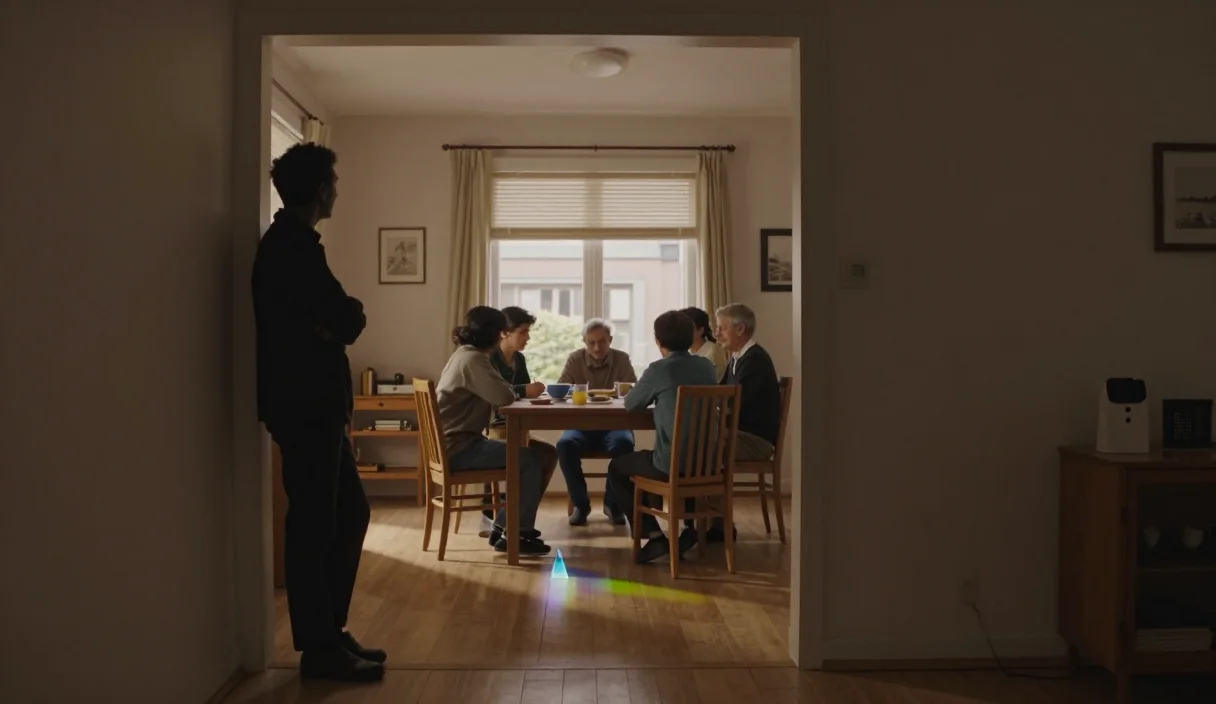
Family acceptance matters because LGBTQ people often judge disclosure against the risk of losing safety, housing, income, faith community or family ties. Coming out can bring honesty and closeness, but delaying disclosure or remaining private may be the safer choice. No one owes disclosure simply to satisfy another person’s expectations.
Coming out is also rarely a single event. A person may tell a sister but not a parent, introduce a partner to friends but not colleagues, or discuss sexual orientation while keeping questions about gender private. In a weighted U.S. survey conducted in January 2025 among 3,959 LGBTQ adults, 23 percent said no parent or person who raised them knew about their identity, while 25 percent of employed respondents with colleagues said none of their co-workers knew. Selective disclosure remains part of adult life, not only adolescence.
Family acceptance does not require instant understanding or the absence of difficult emotions. It begins with conduct: preserving safety, refusing humiliation and coercion, respecting reasonable privacy, and keeping the person within the ordinary life of the family. Acceptance and rejection can coexist while relatives adjust, which is why relationships should be judged by repeated behavior rather than a single declaration.
This guide examines what reliable research can and cannot tell us. It also considers parents, partners, adults who disclose later in life, people who never disclose, and families trying to repair trust after harm.
What does family acceptance mean for LGBTQ people?
Family acceptance means that a lesbian, gay, bisexual, transgender or queer person remains safe, respected and included within family life. It is expressed through behavior: listening without threats, protecting housing, respecting privacy, welcoming important relationships and opposing mistreatment by other relatives. It does not require immediate emotional ease.
Acceptance is sometimes described as a simple attitude, but family life is more complicated. A parent may say that a child is loved while refusing to acknowledge the child’s partner. Another may feel confused yet defend the child against insults from relatives. Research from the Family Acceptance Project treats accepting and rejecting reactions as distinct patterns that can occur together while a family is changing.
This distinction matters because love stated in general terms can be undermined by specific conduct. Telling a gay son that he is welcome but his partner is not, pressuring a bisexual daughter to remain silent, or using housing to compel a transgender relative to suppress their identity makes belonging conditional.
Acceptance can begin before agreement. A relative who remains morally uncertain can still say that there will be no threats, insults, forced disclosure or withdrawal of basic support. The family can continue discussing belief, language and expectations without making one person’s security the price of that discussion.
Families dealing with religious disagreement may find additional context in why faith communities disagree about LGBTQ people. Differences among and within religious traditions mean that conflict should not be treated as inevitable, but neither should sincere moral conflict be dismissed as unreal.
Why might someone come out, wait or never disclose?
People may disclose because they want honesty, recognition, intimacy or freedom from constantly editing their lives. They may wait or never disclose because they depend on relatives for housing, money, care or employment, fear violence or rejection, belong to a restrictive culture or faith community, or simply regard the information as private.
The decision is seldom a pure test of courage. A teenager whose parents control housing, transport, communication and school arrangements faces different consequences from an independent adult. An adult may still depend on a family business, shared childcare, disability support, elder care or immigration-related assistance. Financial independence can reduce some risks without removing emotional dependence or the possibility of disrupted family ties.
Culture and faith may shape what disclosure means. A person may fear not only parental disapproval but also gossip, congregational discipline, pressure on siblings or shame directed at the wider family. Someone can value the family’s culture and religion while also fearing the way relatives may apply them.
Work creates another boundary. An employee may be open with friends but avoid mentioning a spouse or partner at work because of previous harassment, uncertain workplace culture or dependence on a supervisor’s goodwill. The 2025 Pew survey found that disclosure varied across parents, siblings, extended family, friends and colleagues, illustrating that being out is not an all-or-nothing status.
There are personal reasons as well. Some people need time to understand their sexuality or gender. Bisexual people in different-sex relationships may not see an obvious moment for disclosure. Others dislike identity labels, reject the expectation of a formal announcement or do not want intimate information made into a family debate.
Disclosure can be valuable in a supportive setting, but research does not show that openness is always beneficial regardless of context. Concealment can create strain, yet it can also reduce immediate exposure to discrimination or victimization. The safer question is not simply, “Should I come out?” It is, “What might happen in this particular relationship, and what support would exist afterward?”
What is the difference between privacy, secrecy and a double life?
Privacy is a chosen boundary around personal information. Secrecy usually involves active concealment because disclosure feels forbidden or dangerous. A sustained double life requires maintaining separate relationships, explanations and versions of daily life over time. These are useful working distinctions, not diagnoses or judgments about character.
A private person may answer honestly when relevant but decide that relatives do not need details about dating or gender exploration. Someone keeping a secret may remove messages, avoid certain photographs or invent explanations because another person could use the truth against them. A double life may involve presenting one partner as a roommate, attending family events alone, changing clothing before visiting home or maintaining incompatible accounts of where one lives.
The boundaries can overlap. Privacy can gradually become secrecy when relatives demand information or punish honest answers. A protective secret can grow into a double life when years of birthdays, holidays, illnesses and relationships must be explained without acknowledging central parts of a person’s life.
Concealment can require vigilance, memory and careful control of ordinary conversation. A 2020 meta-analysis covering 193 studies and 92,236 participants found a small association between sexual-orientation concealment and internalizing problems such as depression, anxiety and distress. The authors also found contradictory patterns across outcomes and emphasized that few studies could establish causation.
That finding should not be turned into a command to disclose. A burdened double life may harm closeness, including the dignity of a hidden partner, but immediate openness can be dangerous. Ethical choices sometimes involve competing responsibilities: personal safety, honesty, a partner’s needs, children’s privacy and continued access to family. There is no rule that resolves every case.
| Experience | Typical feature | Possible reason | Main concern |
|---|---|---|---|
| Privacy | A person chooses who receives personal information | Autonomy, temperament or relevance | Others may mistake a boundary for shame or distrust |
| Secrecy | Information is actively hidden from particular people | Fear of rejection, punishment, discrimination or unwanted exposure | Stress, isolation and the risk of discovery |
| Sustained double life | Separate roles and accounts must be maintained over time | Long-term dependence, cultural pressure or serious safety concerns | Strain on the individual, partner and relationships in both settings |
How does shame become a family and social experience?
Shame is not only an emotion inside one person. It can be created and reinforced between people when belonging is made conditional on silence, conformity or denial. Family reactions, religious messages, public hostility, jokes and workplace expectations can teach someone that being known may lead to humiliation or abandonment.
Individual shame often sounds like self-condemnation: “There is something wrong with me.” Interpersonal shame is communicated through gestures and rules: do not tell your grandparents, do not bring your partner, change your clothes before church, or never discuss this with the children. Social shame appears when institutions and communities treat heterosexuality or conventional gender expression as the only respectable possibilities.
These levels interact. A person may begin policing speech and mannerisms before anyone says anything openly. Relatives may also feel shame because they anticipate judgment from neighbours, congregations or extended family. Their anxiety is real, but transferring it to an LGBTQ family member through blame or enforced secrecy deepens the injury.
A 2026 prospective study of sexual- and gender-minority adolescents found that greater family rejection was followed by increased internalized homo-, bi- or transphobia and reduced hope and community belonging over the short follow-up period. The study cannot prove that rejection alone caused these changes, but it supports the view that self-directed shame develops within relationships and social conditions, rather than appearing from nowhere.
Learning what science says about whether being gay is a choice may correct one common misconception. Broader questions about sexuality and gender are discussed in the science of sex, sexuality and gender identity. Facts can reduce confusion, though evidence alone may not settle questions of theology, family authority or moral tradition.
What does research say about family acceptance and rejection?
Research consistently finds that supportive family reactions are associated with better well-being, while rejection is associated with poorer outcomes. The strongest wording supported by most studies is “associated with,” not “proved to cause.” Samples, measures and time periods differ, and people facing the most severe rejection can be difficult for researchers to reach.
Several studies are especially useful because they show both the pattern and its limitations.
| Study | Population and design | Main finding | Important limits |
|---|---|---|---|
| Ryan and colleagues, 2009 | 224 white and Latino lesbian, gay and bisexual adults ages 21 to 25; retrospective reports of family reactions during adolescence | Higher reported rejection was associated with depression, suicide attempts, illegal drug use and unprotected sexual intercourse in young adulthood. | Nonprobability recruitment, retrospective self-report, restricted age and ethnic groups, and no transgender sample. The design establishes association, not causation. |
| Ryan and colleagues, 2010 | 245 LGBT adults ages 21 to 25; half Latino and half non-Latino white, with 9 percent identifying as transgender; retrospective reports of acceptance during adolescence | Greater acceptance was associated with higher self-esteem, social support and general health, and with lower depression, substance abuse and suicidal thoughts and attempts. Sexual risk showed no clear association. | Participants were recruited through venues in one California region. At least one parent had known during adolescence, so the study did not represent people entirely concealed from caregivers. |
| Xu and colleagues, 2026 | 285 U.S. sexual- and gender-minority youth ages 15 to 18; 54.4 percent youth of color and 57.5 percent transgender or gender diverse; baseline and follow-up roughly five and a half months later | Higher rejection preceded increases in depressive symptoms and internalized stigma and decreases in hope and LGBTQ community belonging. Some examined outcomes, including alcohol use, sexual risk and outness, did not show prospective associations. | Short follow-up, observational design and participants drawn from a larger online intervention study. Youth facing expulsion, homelessness or the most severe rejection were probably underrepresented. |
| Pachankis and colleagues, 2020 | Meta-analysis of 193 sexual-orientation concealment studies with 92,236 participants | Concealment had a small positive association with internalizing problems and a small negative association with substance-use problems; results varied by measurement and sample characteristics. | Most studies were not longitudinal or representative. Highly concealed people are inherently difficult to recruit, and the evidence concerned sexual orientation more than gender-identity disclosure. |
| Pew Research Center, 2025 | Weighted U.S. panel survey of 3,959 LGBTQ adults, conducted January 8–19, 2025 | Disclosure and reported acceptance differed among parents, siblings, extended family, friends and co-workers. The survey also showed substantial differences among gay or lesbian, bisexual and transgender respondents. | A descriptive survey cannot determine health effects or causation. Question wording, nonresponse and small samples for some subgroups can affect estimates. |
How can parents respond to shock, grief, faith or moral conflict?
Parents may experience shock, fear, grief for an imagined future, moral conflict or uncertainty about unfamiliar language. Those feelings do not make abuse acceptable. A parent’s first responsibility is to protect the relationship and the person’s safety, then process difficult emotions with another trusted adult rather than placing that burden on the child.
Fear often has several layers. A parent may worry that a gay child will face discrimination, that a transgender child will be harmed, that relatives will divide into factions, or that acceptance will violate a religious commitment. Some parents blame themselves or search urgently for a cause. Others react defensively because they feel they were the last to know.
The Family Acceptance Project’s guidance encourages professionals to let parents describe their fears and hopes without ridicule while helping them understand which behaviors are experienced as rejecting. Its examples of supportive conduct include requiring relatives to show respect, welcoming an LGBTQ child’s friends or partner, supporting gender expression and helping the young person imagine a viable adult future.
A useful first response is simple:
- Thank the person for trusting you.
- Say clearly that they are loved and safe.
- Ask what they need now and who else knows.
- Promise not to disclose the information without permission.
- Postpone theological arguments, interrogation and demands for certainty.
Parents are allowed to need time. They are not entitled to use that time for threats, surveillance, forced prayer, coercive attempts to change identity, withdrawal of housing or humiliation. A parent can seek counsel from a therapist, clergy member or peer group who will protect both faith and family bonds. The LGBTQ person should not have to defend an entire community while waiting to learn whether they still have a home.
What are the practical consequences of family rejection?
Family rejection can remove much more than emotional approval. It may threaten housing, food, tuition, transport, phone access, childcare, health coverage or employment in a family business. It can also separate someone from siblings, grandparents, cultural traditions and the ordinary network of help on which both young people and adults depend.
The consequences often arrive together. Losing housing can disrupt school or work. Financial pressure can force someone back into a hostile home. A person excluded from family gatherings may lose contact with younger relatives or be told that a partner is responsible for the conflict. Isolation can make it harder to find practical help or to judge whether mistreatment has become normal.
Rejection is not always a dramatic expulsion. It can be conditional belonging: a lesbian daughter may visit only without her wife; a bisexual adult may be told never to discuss that identity; a transgender relative may be included only under a former name. These arrangements preserve the appearance of family unity while placing the cost of that unity on one person and, often, their partner.
The adolescent studies summarized above associate rejection with poorer mental-health and relational outcomes, while the recent prospective study found that rejection preceded reduced hope and community belonging as well as increased depressive symptoms. The evidence does not mean that every rejected person will experience those outcomes, or that family reaction is the only influence on health.
Safety planning may therefore need to be practical rather than symbolic. Before disclosure, a dependent person may consider where they could sleep, who could hold documents, how they would reach school or work, and which trusted adult or local service could respond. Choosing not to disclose until those questions have answers is not dishonesty in any simple sense. It may be self-protection.
How do coming-out experiences differ in adulthood?
Adults come out at many ages, and some never make a general disclosure. Adult decisions may involve spouses, children, ageing parents, workplaces, faith communities and decades of established expectations. Later disclosure is not proof of confusion or cowardice. It often reflects the social conditions in which a person formed relationships and learned what was safe.
The 2025 Pew survey found clear cohort differences. Among gay and lesbian adults, 67 percent of those under 30 said they first told someone before age 18, compared with 24 percent of those aged 60 or older. Among bisexual adults, the corresponding figures were 56 percent for those under 30 and 17 percent for those aged 50 or older. These figures describe generations with different life histories; they do not provide a timetable that individuals should follow.
An adult may disclose after falling in love, ending a different-sex marriage, finding language for a long-standing experience or gaining financial independence. Another may remain selectively open because an ageing parent depends on them, because disclosure could divide a close cultural community, or because the person sees no need for a formal announcement.
Bisexual people may face particular assumptions. Relatives may treat a different-sex relationship as proof that bisexuality is irrelevant, or a same-sex relationship as proof that the person was “really” gay all along. Transgender adults may need to decide separately who receives information about a name, pronouns, medical history or earlier documents. Disclosure about gender is not identical to disclosure about sexual orientation.
Adult coming out can also affect existing partners. A spouse may experience grief, anger or uncertainty without being entitled to threaten, expose or humiliate the person who disclosed. Both people may require independent support. Honesty matters, but difficult truth does not eliminate the need for privacy, safety and humane conduct.
Can partners, chosen family and community replace relatives?
Partners, close friends and chosen family can offer love, practical help and recognition when relatives cannot. They are not automatic replacements for family of origin. New relationships may ease isolation without erasing grief, cultural loss or concern for parents and siblings. Some people maintain both kinds of family; others remain distant from one or both.
Chosen family usually describes relationships treated as family through commitment rather than birth or law. It can include friends, partners, former partners, mentors, neighbours or members of a faith community. Such relationships can provide somewhere to stay, care during illness, holiday companionship and a place where explanations are unnecessary.
The 2025 Pew survey found that LGBTQ adults generally reported greater acceptance from friends than from parents or extended family. Yet only about a quarter said they felt extremely or very connected to a broader LGBTQ community. Community belonging is therefore neither universal nor automatic.
LGBTQ spaces can contain their own exclusions based on race, disability, class, age, bisexuality, religion or gender expression. A person should not be told that losing relatives is easily repaired by finding new people. Chosen family relationships also require boundaries, reliability and repair after conflict, just as other close relationships do.
Partners deserve particular care. No one should be pressured indefinitely to appear as a roommate or friend, but neither should a partner disclose someone else’s identity as leverage. Couples can discuss which events feel tolerable, what introduction will be used, how long a hidden arrangement can continue, and what each person will do if relatives become insulting or threatening.
What makes coming-out conversations safer?
A safer conversation begins with an honest assessment of risk, not with the assumption that disclosure must happen. Consider housing, money, violence, work, digital privacy and available support. Then choose the person, timing, setting and amount of information deliberately. No plan can guarantee a good response, but preparation can reduce avoidable harm.
- Assess dependence and danger.
Ask what the listener controls. A parent may control housing and tuition; a relative may control transport or access to siblings; an employer may affect income. If there is a credible risk of violence, expulsion or coercion, delay may be prudent until local professional support or alternative accommodation is available.
- Start with the safest person.
A supportive sibling, aunt, friend, teacher, counsellor or clergy member may help the person predict reactions and avoid facing a hostile group alone. The safest first disclosure is not necessarily to the closest relative.
- Set the scope.
The speaker can decide whether to name an identity, discuss a relationship, request a new name or pronouns, or simply correct a false assumption. They can also state who may be told next. Coming out to one person is not consent to a family announcement.
- Choose the form.
A letter or message can give both sides time to think. An in-person conversation may allow immediate reassurance. A phone or video call can offer distance and an easier exit. The correct form depends on safety and communication style.
- Prepare the first hour and the next week.
Plan transport, somewhere to stay, a follow-up call and contact with a trusted person. If the response is uncertain, avoid making disclosure immediately before a long journey, examination, work shift or family ceremony.
- Give the listener a constructive task.
A parent who does not know what to say can begin by listening, preserving confidentiality and confirming that housing and love are not in question. Questions can wait until the initial shock has passed.
Research on concealment suggests that the effects of disclosure depend strongly on context, while family guidance emphasizes concrete accepting behaviors rather than declarations alone. These principles support preparation and voluntary choice; they are not a medical prescription or a promise that conversation will repair an unsafe relationship.
How can families set boundaries and rebuild trust?
Trust is rebuilt through repeated conduct, not through a demand that everyone move on. Useful boundaries identify a specific behavior, the response if it continues and what would permit closer contact. Reconciliation may be gradual, partial or impossible. Safety takes priority over restoring the appearance of family harmony.
A boundary might state that slurs will end a visit, private information may not be shared, a partner cannot be insulted, or housing may not be used to force religious or identity change. The purpose is not to control another person’s beliefs. It is to define the conditions under which contact can continue.
Relatives rebuilding trust can take several practical steps:
- Acknowledge the specific conduct that caused harm without adding excuses.
- Correct false information shared with other relatives.
- Stop pressuring the person to debate or change.
- Respect agreed names, relationships and privacy.
- Make small commitments and keep them consistently.
- Accept that forgiveness and renewed contact are separate decisions.
The LGBTQ family member may also need to hear difficult but non-abusive feelings from relatives. A parent can say that the news has challenged long-held expectations. What the parent cannot reasonably demand is that the child become hidden, partnerless or responsible for protecting the family from social embarrassment.
A family does not have to resolve every question before sharing a meal, asking about a partner or defending someone from mistreatment. The Family Acceptance Project’s work suggests that specific supportive behaviors matter even when families remain emotionally or religiously ambivalent.
Some relationships recover after an initially harsh response. Others do not. Gradual rebuilding should be judged by evidence: fewer threats, respected boundaries, honest apologies and dependable inclusion. Promises without changed behavior are not repair.
Where can someone get urgent help?
Someone facing violence, homelessness or a mental-health emergency should prioritize immediate safety over disclosure, reconciliation or family debate. Appropriate help may include local emergency services, a domestic-violence program, a housing or homelessness service, a school social worker, a youth agency, a licensed mental-health professional or another trusted local professional.
In the United States, a person in emotional distress or suicidal crisis can call or text 988 or use the 988 Lifeline chat to reach a trained crisis counsellor. The service asks about immediate safety, listens and can help identify relevant resources.
If there is immediate physical danger, contact local emergency services. A person outside the United States should use the emergency number or crisis service for their country or region. Anyone whose phone or internet use is being monitored should, where possible, seek help through a safer device or a trusted professional in person.
General information cannot assess an individual emergency. A young person who expects to lose housing, or an adult threatened by a relative or partner, should seek local professional assistance before attempting a confrontation or disclosure.
Frequently Asked Questions
Is it okay never to come out?
Yes. Disclosure is a personal decision, not a moral duty, and some people remain private because of safety, dependence, culture or preference. Concealment can carry costs, but research does not justify telling everyone to disclose regardless of circumstances.
How should parents react when a child comes out?
Begin by thanking the child for the trust, confirming love and safety, and asking what support is needed. Parents can process shock, fear or religious conflict with another responsible adult without threatening housing, exposing private information or pressuring the child to change.
Does family acceptance require changing religious beliefs?
Not necessarily. Relatives may retain religious convictions while refusing humiliation, violence, forced secrecy and coercive attempts to change the person. Acceptance begins with safe and respectful conduct, even when theological agreement has not been reached.
Can family relationships recover after rejection?
Some do, especially when apologies are followed by dependable changes in behavior. Recovery is not guaranteed, and the rejected person is not required to resume close contact before safety and trust have been restored.
What if a partner is tired of being hidden from the family?
Both concerns deserve recognition: one partner may fear rejection, while the other may be hurt by being treated as a secret. The couple can agree on boundaries, introductions, events and a realistic time frame, but neither should use forced disclosure or indefinite concealment as a substitute for an honest decision.
Sources and further reading
- Personal Experiences With Acceptance and Discrimination
- The Experiences of LGBTQ Americans Today: Methodology
- Family Rejection as a Predictor of Negative Health Outcomes in White and Latino Lesbian, Gay, and Bisexual Young Adults
- Family Acceptance in Adolescence and the Health of LGBT Young Adults
- A Prospective Study Examining the Consequences of Family Rejection for Sexual and Gender Minority Youth
- Sexual Orientation Concealment and Mental Health: A Conceptual and Meta-Analytic Review
- Supportive Families, Healthy Children
- What to Expect From the 988 Suicide & Crisis Lifeline
No public comments yet
Be the first to share a thoughtful note. Approved comments will appear here.