Cruising: An Intimate History and Seven Queer Studies
Eight queer social and cultural history books reveal how sexuality has been shaped by public space, regional life, literature, law, memory, HIV and changing ideas of intimacy.
By Adrian Solen · Published September 28, 2026 · Approximately 8 minutes
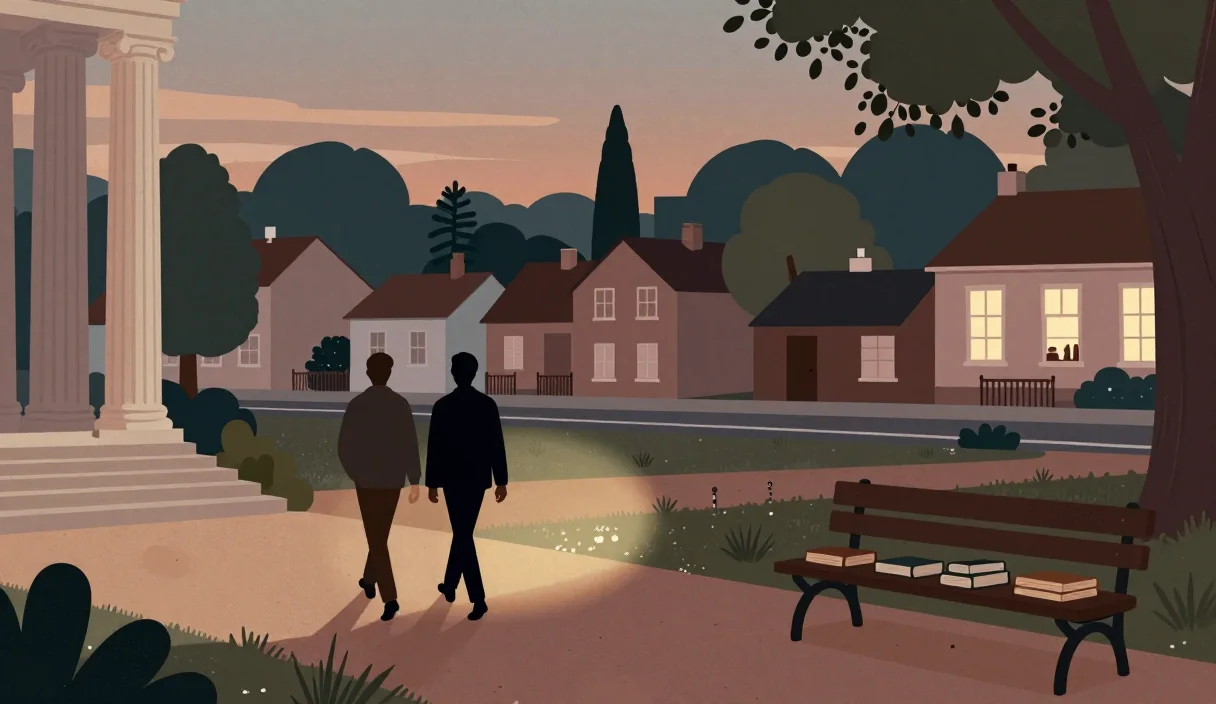
Cruising: An Intimate History of a Radical Pastime is Alex Espinoza’s 2019 blend of narrative history, oral testimony and memoir about men seeking sexual contact in public and semi-public spaces. It is an accessible starting point in this eight-book guide, while the other studies show how place, archives, literature, law, HIV and memory produce different kinds of queer history.
These books range from Georgian Britain and postwar Mississippi to Los Angeles, India and the Twin Cities of Minneapolis and St. Paul. Some follow individual lives. Others reconstruct regional communities or examine the cultural meanings attached to literature, urban space and sexual practices. Together, they show why queer social history cannot be reduced to a single march from persecution to acceptance.
Several titles use words such as “homosexuals” or “female homosexuality.” That terminology reflects the language of particular authors, publishers and publication periods. It can be necessary when giving an exact title or discussing a historical source, but readers should not assume that every person described would have used it or that it is always the best language for present-day conversation.
The books also ask for different styles of reading. Narrative history builds an account from archives while arranging people and events into a chronological story. Regional history concentrates on a defined landscape, often combining local records with interviews and oral histories. Literary criticism studies how texts create, hide or distort sexual meaning; it does not necessarily claim that fictional representations describe a whole population. Sociology examines communities, institutions and patterns of behaviour. Cultural studies often brings these methods together to consider media, symbolism, power and the researcher’s own position.
For a wider chronological introduction, see the beginner guide to LGBTQ+ history books for adults. Readers who want works comparing identity, bodies, science and lived experience may prefer the guide to books about gender identity and sexuality. The eight selections below are narrower. Their value lies in showing what becomes visible when a writer studies one city, one region, a group of texts or a contested form of intimacy closely.
Cruising: An Intimate History of a Radical Pastime by Alex Espinoza
The edition used here is the 2019 first edition published by the Unnamed Press in Los Angeles. Espinoza moves from Greek antiquity and eighteenth-century English molly houses to the 1970s and the period of location-based dating apps. He combines historical research, oral history and personal experience, making this a narrative cultural history rather than a detached academic survey.
The book examines cruising largely as a practice among men, asking how public and semi-public places could become meeting grounds under conditions of stigma or repression. Readers should expect candid discussion of sex, policing and risk, presented as part of a social history of space. It will suit those who value an authorial voice and a wide historical range more than exhaustive coverage of one city or decade.
| Book | Geography | Historical period | Academic difficulty | Principal theme |
|---|---|---|---|---|
| Cruising | Europe, the United States and selected international settings | Antiquity to the app era | Accessible | Public space and sexual encounter |
| Queer Enlightenments | Britain, Europe and New York | 1726–1836 | Accessible to moderate | Lives, law and domestic relationships |
| Gay L.A. | Los Angeles | Spanish colonial encounters to the 1990s | Accessible | Urban community and political culture |
| From Vice to Nice | Minneapolis and St. Paul | 1970s–1990s | Advanced | AIDS, gentrification and exclusion |
| Men Like That | Mississippi and the American South | Post-Second World War decades | Moderate | Rural and small-town queer life |
| The Apparitional Lesbian | European and American literature and culture | Eighteenth to twentieth centuries | Advanced | Lesbian visibility in cultural texts |
| The World of Homosexuals | India, with interviews from abroad | Published in 1977 | Accessible, but historically dated | Interview-based social inquiry |
| Unlimited Intimacy | Predominantly United States gay male subcultures | Late twentieth and early twenty-first centuries | Advanced | Barebacking, HIV and intimacy |
Queer Enlightenments: A Hidden History of Lovers, Lawbreakers, and Homemakers by Anthony Delaney
Atlantic Monthly Press published the United States hardcover edition on October 7, 2025. Delaney’s narrative history follows eleven lives between 1726 and 1836, moving through taverns, prisons, courts, cruising grounds and homes. The focus is the long eighteenth century, especially people whose relationships, gender presentation or sexual lives brought them into contact with law, gossip and surviving archives.
This is archival history shaped into individual stories. That method can make an unfamiliar period immediate, but Delaney also addresses the danger of forcing modern identities onto people who did not possess today’s vocabulary. Queer Enlightenments will appeal to readers who enjoy character-led history and want evidence of intimacy, companionship and domestic life alongside accounts of criminalization. It is readable, although its treatment of incomplete and sometimes hostile records rewards careful attention.
Gay L.A.: A History of Sexual Outlaws, Power Politics, and Lipstick Lesbians by Lillian Faderman and Stuart Timmons
Basic Books released this 464-page hardcover edition on October 3, 2006. Faderman and Timmons examine roughly two centuries of Los Angeles history, from early encounters under Spanish colonialism through Hollywood, the Second World War, postwar organizing, gay liberation and the commercial culture of the 1990s.
Gay L.A. is broad urban social history. Its evidentiary base includes archival documents, photographs and more than 200 interviews, allowing public politics and private memories to appear together. The authors consider gay men, lesbians, transgender people, entertainers, organizers and others who made community in a city often defined by migration and reinvention. This is the gay LA book for readers seeking a substantial but approachable account of one city. It is especially valuable for understanding how neighborhoods, employment, entertainment and political organization influenced one another.
From Vice to Nice: Midwestern Politics and the Gentrification of AIDS by René Esparza
The University of North Carolina Press published the paperback edition on October 21, 2025. Esparza concentrates on Minneapolis and St. Paul from the 1970s through the 1990s, shifting attention away from the coastal cities that dominate many histories of HIV and AIDS in the United States.
This is an academic work of urban history and cultural studies based on archives, oral histories and urban-studies research. Esparza argues that responses to AIDS became connected to policing, redevelopment and a politics of respectability, with sex workers, transgender women, some gay men and queer venues facing surveillance or displacement. The subject includes illness, death, criminalization and racial inequality, but the analysis concerns institutions and land use rather than sensational accounts of private behaviour. Readers interested in AIDS history, Midwestern politics or gentrification will value it most; newcomers may find its conceptual vocabulary demanding.
Men Like That: A Southern Queer History by John Howard
This guide uses the first paperback edition, published by the University of Chicago Press in 2001. Howard studies postwar Mississippi across four decades, challenging the assumption that meaningful queer life existed only in major cities. Farms, churches, schools, workplaces, sports facilities and roadside rest areas all become part of the historical landscape.
Men Like That is regional history built from oral testimony, conventional archival documents and cultural materials including pulp fiction, artwork and popular music. Its attention to memory is important: interviews preserve experiences that official records often registered only when police, courts or public scandal became involved. Howard also considers how race, politics and sexual stigma interacted in the South. This book is best for readers interested in rural history, local networks and the methodological problems of recovering lives that were rarely documented on their own terms.
The Apparitional Lesbian: Female Homosexuality and Modern Culture by Terry Castle
The edition considered here is Columbia University Press’s paperback, published in November 1995. Castle’s essays range across three centuries of European and American literature and culture, discussing writers and historical figures including Daniel Defoe, Denis Diderot, Marie Antoinette, Anne Lister, Henry James, Virginia Woolf and Djuna Barnes.
This is literary criticism rather than a chronological social history. Castle’s central concern is how lesbian presence can be made ghostlike: suggested, displaced, denied or treated as though it were impossible even when evidence remains visible. Her sources are novels, journals, reputations, historical narratives and other cultural texts. Readers who enjoy close reading and arguments about representation will find it rewarding. Those seeking dates, organizations and legal reforms should begin elsewhere. The subtitle reproduces the book’s verified wording; it should not be treated as a universal description of women who love women today.
The World of Homosexuals by Shakuntala Devi
The World of Homosexuals has no subtitle in the 1977 Vikas Publishing House record. Written by Shakuntala Devi and published in New Delhi, the 160-page book draws on personal interviews with gay people in India and abroad. It combines individual testimony with a wider discussion of sexuality, prejudice and social attitudes.
Its greatest value today is historical. The book offers evidence of how same-sex sexuality could be discussed in English-language Indian publishing during the 1970s, when stigma and criminalization shaped both public language and personal disclosure. It is an interview-based work of social inquiry rather than a modern academic study, and some concepts or terms reflect its publication era. Readers studying Indian queer history, memory or the history of public debate are most likely to value it. The word “homosexuals” belongs to the title and need not be adopted as the preferred current term for every community or individual.
Unlimited Intimacy: Reflections on the Subculture of Barebacking by Tim Dean
The University of Chicago Press published this 256-page edition in 2009. Dean examines barebacking within particular gay male sexual subcultures, drawing on bars, sex clubs, websites, pornography and his own experience. HIV, risk, fantasy and ideas of kinship are central to the analysis.
Unlimited Intimacy is cultural criticism informed by sexuality studies, psychoanalytic interpretation and observation. It does not provide a representative sociology of all gay men, nor should its account of a specific subculture be mistaken for sexual-health guidance. Readers should expect explicit discussion of sexual practices, pornography and HIV transmission. Dean’s aim is to understand how participants gave meaning to vulnerability and intimacy rather than to offer a simple defense or condemnation. This is the most theoretically demanding book on the list and will be most useful to advanced readers studying sexual cultures, ethics, representation or the history of HIV-related discourse.
Frequently Asked Questions
Is Cruising: An Intimate History of a Radical Pastime a memoir or a history?
It is both, although history provides its main structure. Alex Espinoza combines historical research and oral testimony with personal experience, giving the book a more intimate voice than a conventional academic survey.
Which book is best for queer history outside major coastal cities?
Men Like That is the clearest choice for rural and small-town Southern history, especially postwar Mississippi. From Vice to Nice examines the urban Midwest through Minneapolis and St. Paul, with a more academic focus on AIDS, redevelopment and political respectability.
Why do some of these book titles use homosexual or homosexuality?
The World of Homosexuals was published in 1977, while The Apparitional Lesbian: Female Homosexuality and Modern Culture first appeared in an earlier scholarly context. Exact titles should be preserved in bibliographic discussion, but their terminology should not automatically replace the words individuals and communities use for themselves today.
Which books discuss HIV and sexual practices most directly?
From Vice to Nice studies AIDS, criminalization, urban policy and displacement in the Twin Cities. Unlimited Intimacy examines barebacking, pornography, HIV and intimacy within a particular gay male subculture, while Cruising includes candid historical and personal discussion of public sexual encounters.
Sources and further reading
- Cruising: An Intimate History of a Radical Pastime | WorldCat
- Queer Enlightenments | Grove Atlantic
- Gay L. A. by Lillian Faderman and Stuart Timmons | Hachette Book Group
- From Vice to Nice | University of North Carolina Press
- Men Like That: A Southern Queer History | WorldCat
- The Apparitional Lesbian | Columbia University Press
- The World of Homosexuals | WorldCat
- Unlimited Intimacy | University of Chicago Press
No public comments yet
Be the first to share a thoughtful note. Approved comments will appear here.